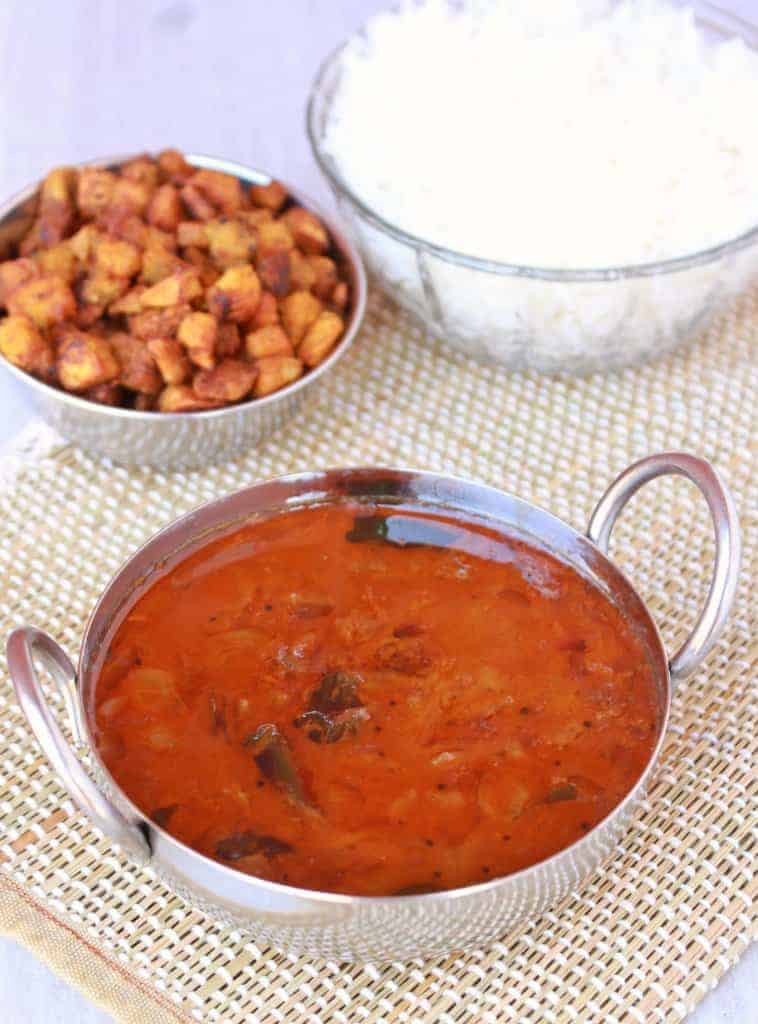
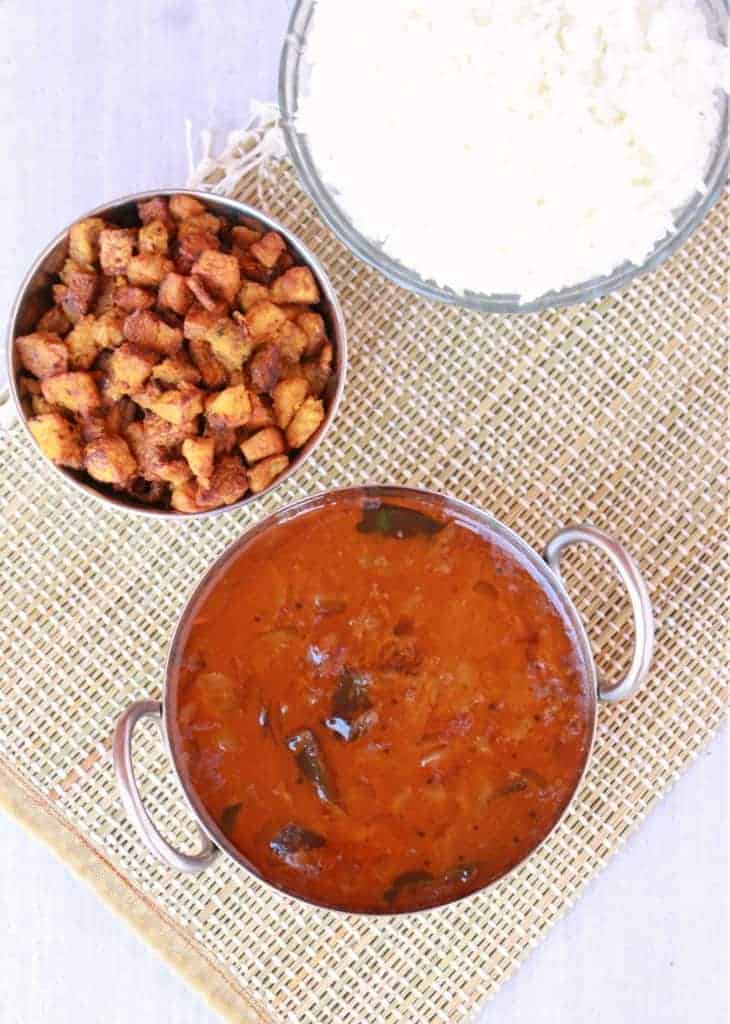
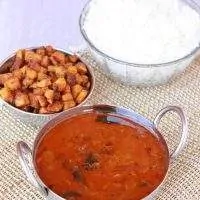
Vengaya Vatha Kuzhambu is a classic comfort recipe that makes me feel right at home. Make it a weekend lunch menu along with some roasted curry.
This week I am blogging about different rice and gravy dishes and after blogging about one of my favorite recipes from Northern India - Rajma Masala , today I move on to my hometown.
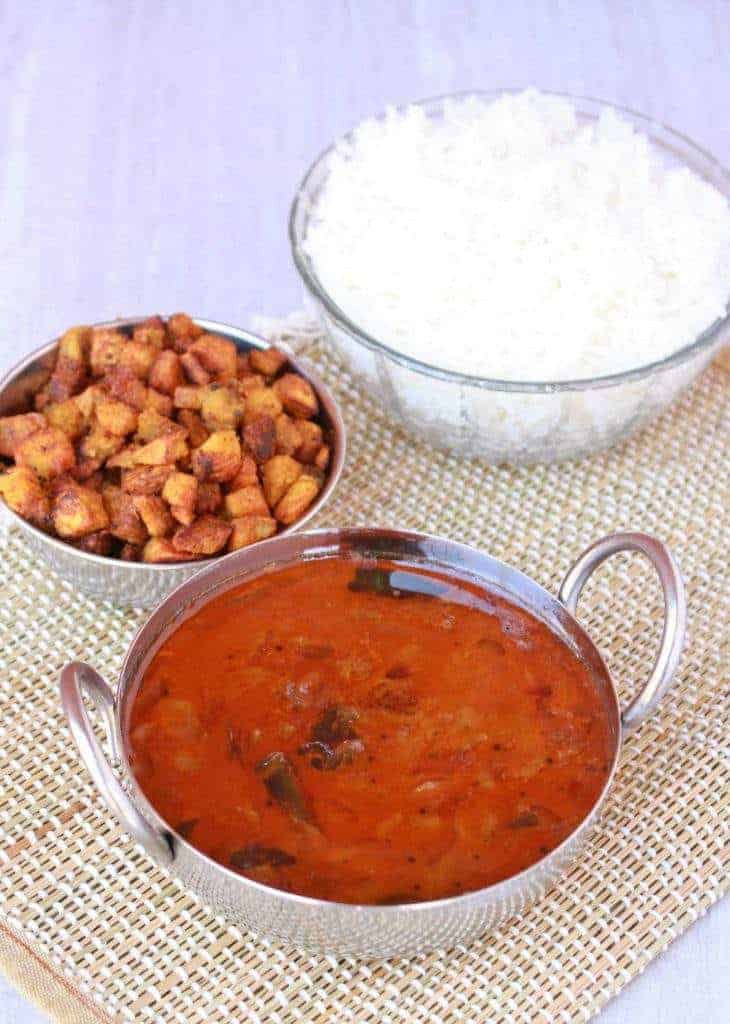
My mother was very famous for her Vathal Kuzhambu and I can slowly start seeing hints of it in me. My boys love Vatha kuzhambu and their favorite is the Pumpkin Vathal Kuzhambu .
This Vengaya Vathal Kuzhambu is my favorite and even though I am a big fan of small onions, this particular recipe of Vengaya Vathal Kuzhambu, I like it with regular red onions.
Anytime I make Vengaya Vatha Kuzhambu, my husband enjoys it for dinner rather than lunch as he says that the longer the Vengaya Vathal Kuzhambu sits, the deeper the flavors penetrate and it tastes even more delicious.
That solves my problem with leftovers as no one minds eating this Vengaya Vathal Kuzhambu again the next day or a couple of days later. But that brings the other problem, I can never have enough to store for leftovers!
A few notes before I go to the recipe. Make sure you extract juice from tamarind rather than using the paste. It definitely adds more flavor to the recipe. Also use gingelly oil if possible, as that adds to the flavor as well. I always add a bit of jaggery at the end and I would highly recommend it.
Preparation time - 10 minutes Cooking time - 45 minutes Difficulty level - easy
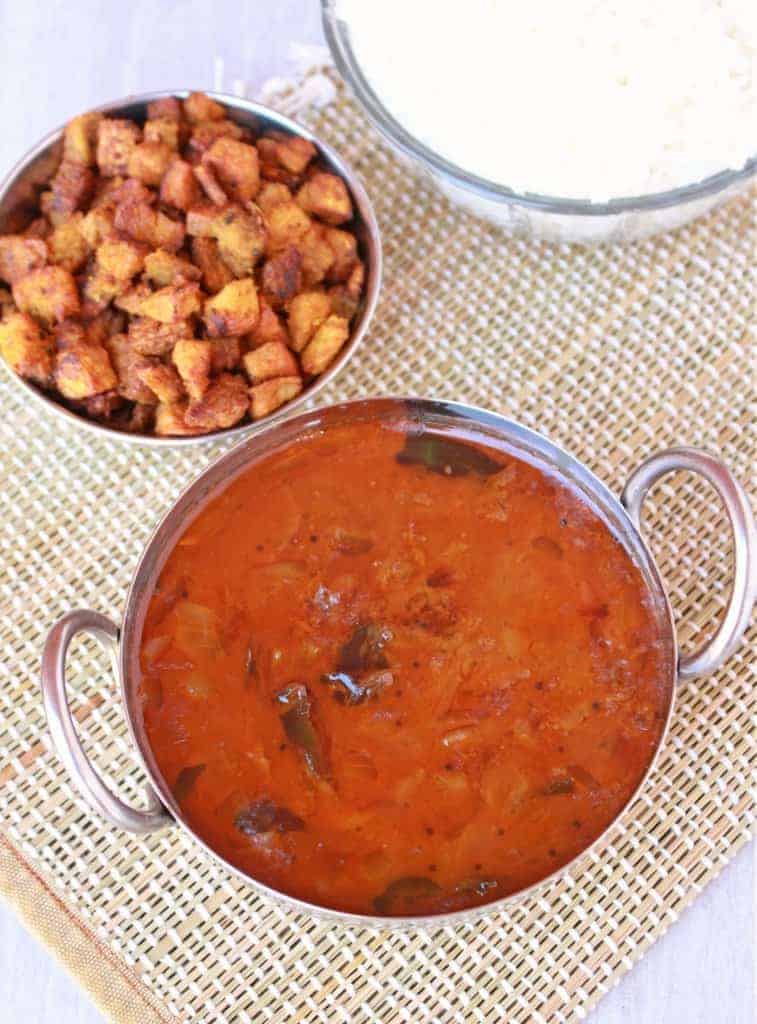
Ingredients to make Vengaya Vatha Kuzhambu - Serves 6 -8
- Tamarind - as big as a large lemon
- Onion - 1 cup (finely chopped)
- Gingelly oil - 4 tablespoon (can use any other oil as well)
- Mustard seeds - 1 tsp
- Tuvaram Paruppu / toor dal - 2 tsp
- Red chilies - 4 to 5
- Fenugreek seeds / vendhayam - 1 tsp
- Sambhar powder - 3 tbsp
- Rice flour - 1 teaspoon (optional)
- Curry leaves - few
- salt - to taste
- Jaggery - a small piece
Procedure
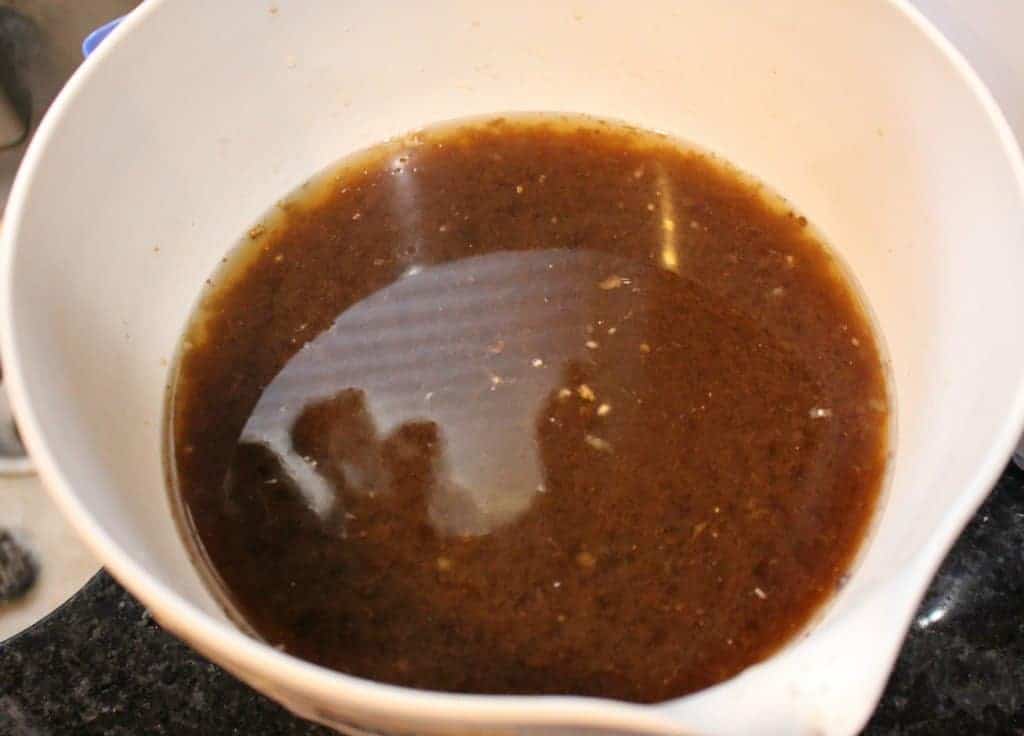
- Soak the tamarind in 2 cups of hot water for about 15 minutes. Squeeze the pulp well and extract the juice. Add 2 more cups of water to the squeezed pulp and extract that water as well.
In a heavy bottom pan, heat the oil. I use gingelly oil for the flavor but feel free to use the oil of your choice.
Add the mustard seeds and let it crackle. Then add the toor dal, red chilies, and vendhayam (fenugreek seeds) and fry for about 15 seconds.
Add the chopped onions and saute them for about 2 to 3 minutes until they start to become aromatic.
Now add the sambhar powder and give it a quick mix. Add the extracted tamarind water along with the salt needed and curry leaves. Mix well and let it come to a boil.
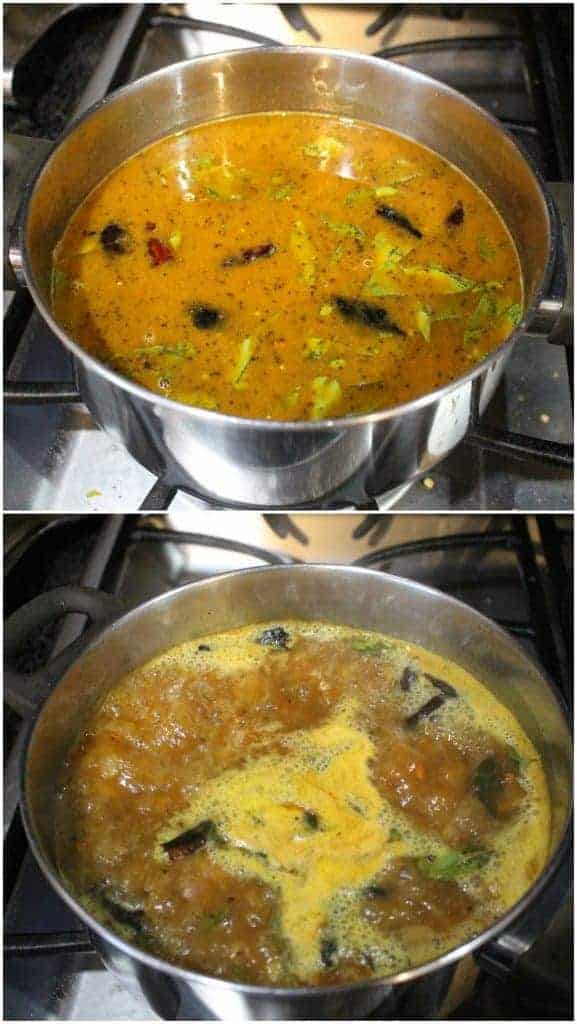
Simmer the kuzhambu and let it cook for about 15 to 20 minutes.
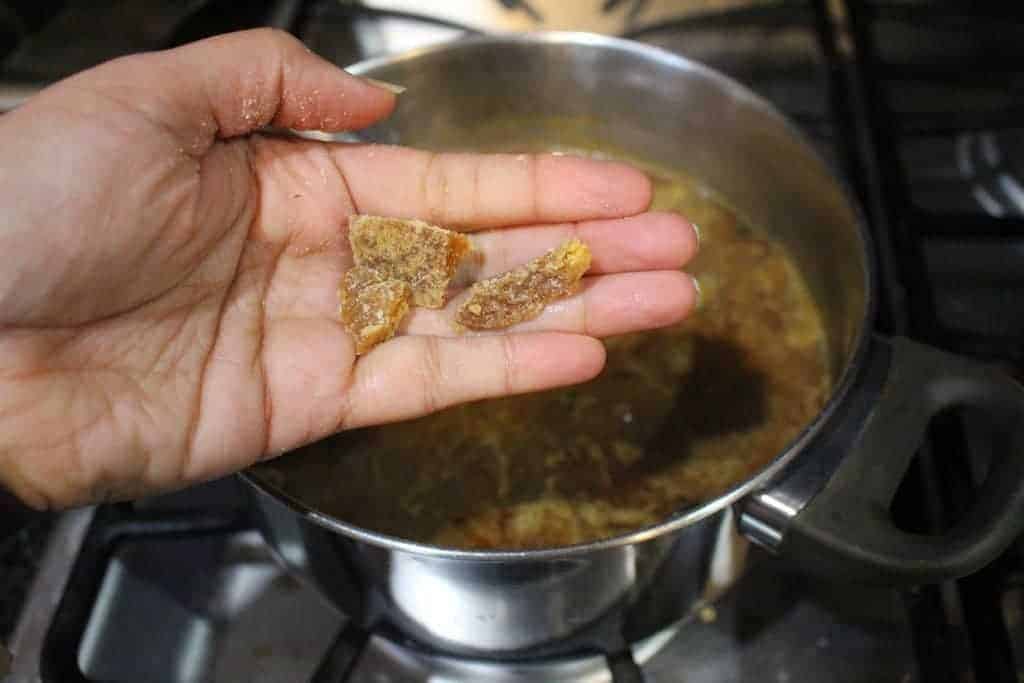
Add the jaggery to the simmering kuzhambu at this stage.
Check the consistency of the kuzhambu. Depending on the quality of the tamarind, the kuzhambu could reach the desired thickness on its own, but sometimes we might need to add a little bit of rice flour emulsion to get it there.
If the kuzhambu is not to your desired consistency, then add a little rice flour which is mixed with about 4 tablespoon of water to the boiling kuzhambu and mix well. The kuzhambu will thicken and at this stage turn off the flame.
Cover the pan with a lid to retain the flavor of the kuzhambu. Serve with hot rice and ghee!
Other Kuzhambu Recipes
- Iru Puli Kuzhambu - Tirunelveli Special
- Karamani Kara Kuzhambu | Black Eyed Peas Kuzhambu | Thatta Payiru Kuzhambu
- Milagu Kuzhambu - Molagu Kuzhambu - Spicy Black Pepper Kuzhambu
- Parangikkai Vathal Kuzhambu | Pumpkin Vatha Kuzhambhu
Recipe
Ingredients
- ▢ 3 inch Tamarind as big as a large lemon
- ▢ 1 cup Onion finely chopped
- ▢ 4 tablespoon Gingelly oil can use any other oil as well
- ▢ 1 teaspoon Mustard seeds
- ▢ 2 teaspoon Tuvaram Paruppu / toor dal
- ▢ 4 Red chilies
- ▢ 1 teaspoon Fenugreek seeds / vendhayam
- ▢ 3 tablespoon Sambhar powder
- ▢ 1 teaspoon Rice flour optional
- ▢ few Curry leaves
- ▢ to taste salt
- ▢ 1 teaspoon Jaggery
Instructions
- Soak the tamarind in 2 cups of hot water for about 15 minutes. Squeeze the pulp well and extract the juice. Add 2 more cups of water to the squeezed pulp and extract that water as well.
- In a heavy bottom pan, heat the oil. I use gingelly oil for the flavor, but feel free to use oil of your choice.
- Add the mustard seeds and let it crackle. Then add the toor dal, red chilies and vendhayam (fenugreek seeeds) and fry for about 15 seconds.
- Add the chopped onions and saute it for about 2 to 3 minutes until they start to become aromatic.
- Now add the sambhar powder and give it a quick mix. Add the extracted tamarind water along with salt needed and curry leaves. Mix well and let it come to a boil.
- Simmer the kuzhambu and let it cook for about 15 to 20 minutes.
- Add the jaggery to the simmering kuzhambu at this stage.
- Check the consistency of the kuzhambu. Depending on the quality of the tamarind, the kuzhambu could reach the desired thickness on its own, but sometimes we might need to add a little bit of rice flour emulsion to get it there.
- If the kuzhambu is not to your desired consistency, then add a little rice flour which is mixed with about 4 tablespoon of water to the boiling kuzhambu and mix well. The kuzhambu will thicken and at this stage turn off the flame.
- Cover the pan with a lid to retain the flavor of the kuzhambu. Serve with hot rice and ghee!
Notes
- Use good quality tamarind for the best result. Fresh tamarind works better than tamarind paste.
- The more the kuzhambu simmers, the better it tastes.
- Drumsticks, vegetable preserves, radish or any such vegetable can be used instead of onions.
- Small onions or pearl onions gives the kuzhambu the best flavor.
- The kuzhambu is best when served with hot rice and dollop of ghee.
Nutrition
More Sambar, Rasam and Kuzhambu
- Kale Poricha Kuzhambu
- Vendhaya Keerai Sambar | Methi Leaves Sambar
- Mullangi Vatha Kuzhambu | Radish Kuzhambu
- Milagu Jeera Rasam | Pepper And Cumin Rasam
Vengaya Vathal Kuzhambu
Ingredients
- 3 inch Tamarind as big as a large lemon
- 1 cup Onion finely chopped
- 4 tablespoon Gingelly oil can use any other oil as well
- 1 teaspoon Mustard seeds
- 2 teaspoon Tuvaram Paruppu / toor dal
- 4 Red chilies
- 1 teaspoon Fenugreek seeds / vendhayam
- 3 tablespoon Sambhar powder
- 1 teaspoon Rice flour optional
- few Curry leaves
- to taste salt
- 1 teaspoon Jaggery
Instructions
- Soak the tamarind in 2 cups of hot water for about 15 minutes. Squeeze the pulp well and extract the juice. Add 2 more cups of water to the squeezed pulp and extract that water as well.
- In a heavy bottom pan, heat the oil. I use gingelly oil for the flavor, but feel free to use oil of your choice.
- Add the mustard seeds and let it crackle. Then add the toor dal, red chilies and vendhayam (fenugreek seeeds) and fry for about 15 seconds.
- Add the chopped onions and saute it for about 2 to 3 minutes until they start to become aromatic.
- Now add the sambhar powder and give it a quick mix. Add the extracted tamarind water along with salt needed and curry leaves. Mix well and let it come to a boil.
- Simmer the kuzhambu and let it cook for about 15 to 20 minutes.
- Add the jaggery to the simmering kuzhambu at this stage.
- Check the consistency of the kuzhambu. Depending on the quality of the tamarind, the kuzhambu could reach the desired thickness on its own, but sometimes we might need to add a little bit of rice flour emulsion to get it there.
- If the kuzhambu is not to your desired consistency, then add a little rice flour which is mixed with about 4 tablespoon of water to the boiling kuzhambu and mix well. The kuzhambu will thicken and at this stage turn off the flame.
- Cover the pan with a lid to retain the flavor of the kuzhambu. Serve with hot rice and ghee!
Notes
- Use good quality tamarind for the best result. Fresh tamarind works better than tamarind paste.
- The more the kuzhambu simmers, the better it tastes.
- Drumsticks, vegetable preserves, radish or any such vegetable can be used instead of onions.
- Small onions or pearl onions gives the kuzhambu the best flavor.
- The kuzhambu is best when served with hot rice and dollop of ghee.
