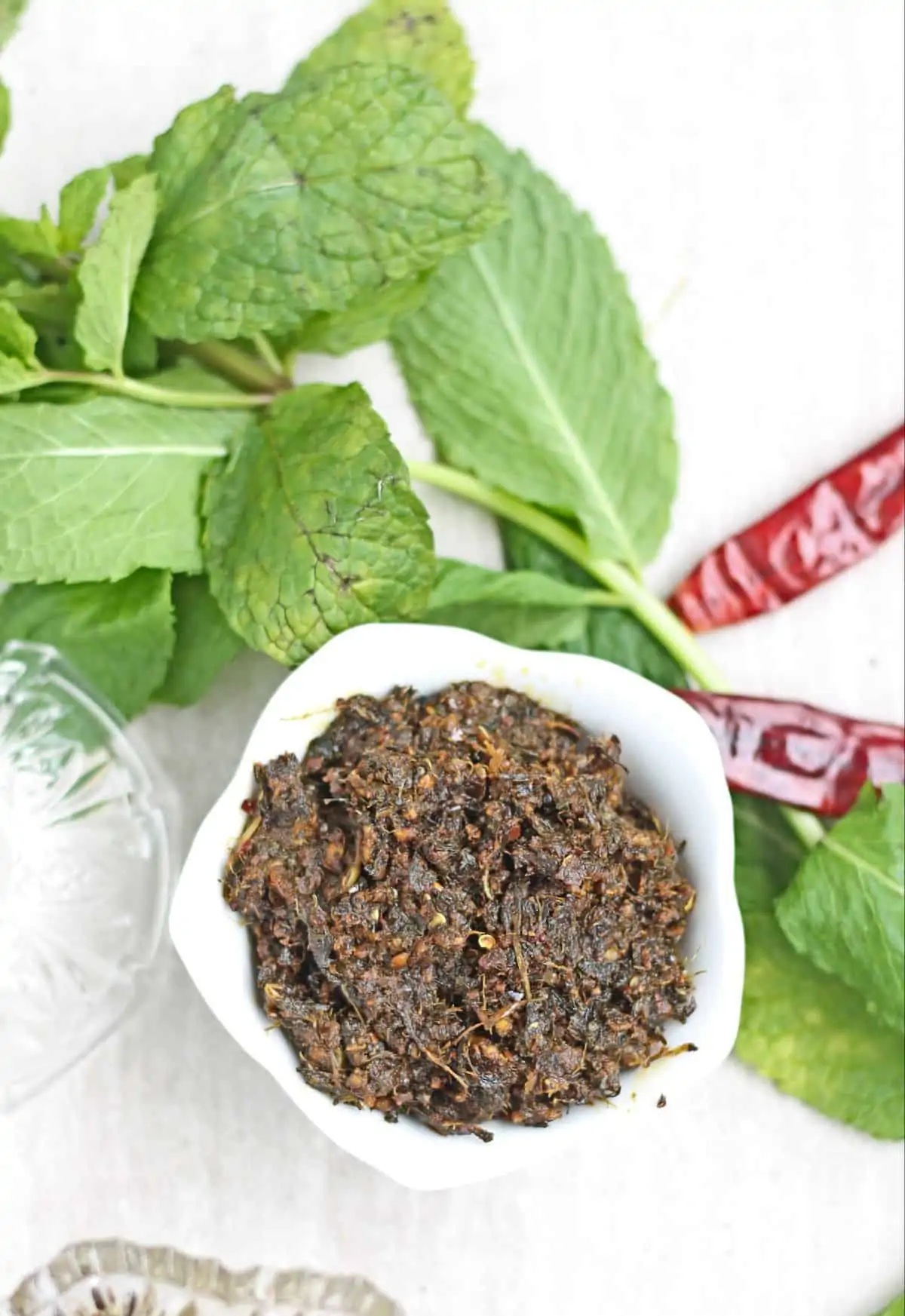
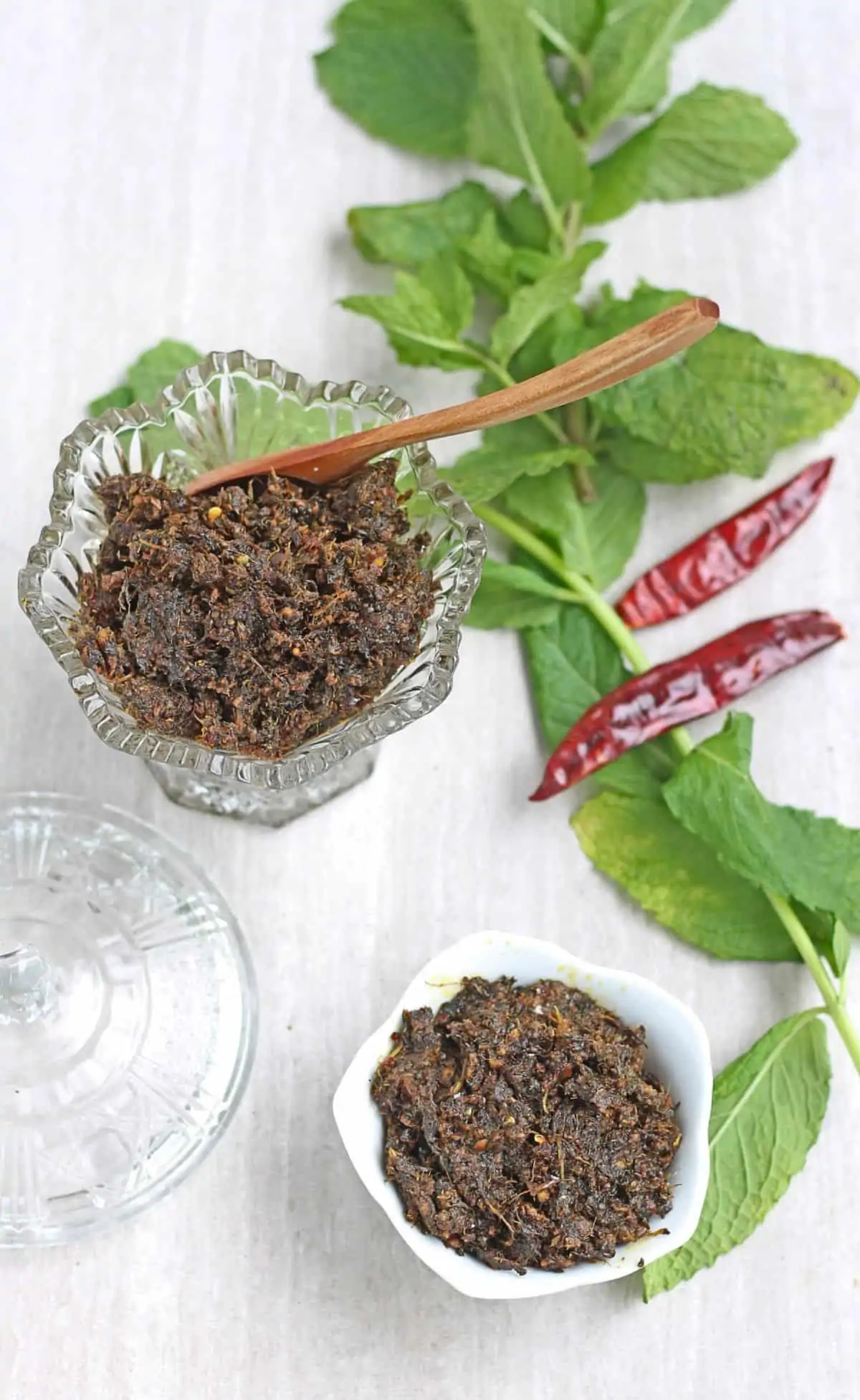
If you are looking to make recipes with mint from your garden, you have come to the right place. This pudina thokku / Mint thogayal made with fresh mint leaves and spices is a delight to have and works so well with plain rice and some sesame oil.
I have a weakness for mint and have a history of growing mint like wildfire. Now that’s past me, and I have learned from my mistakes. I now have just a couple of pots (maybe 4 or 5) with mint plants, and they are doing quite well.
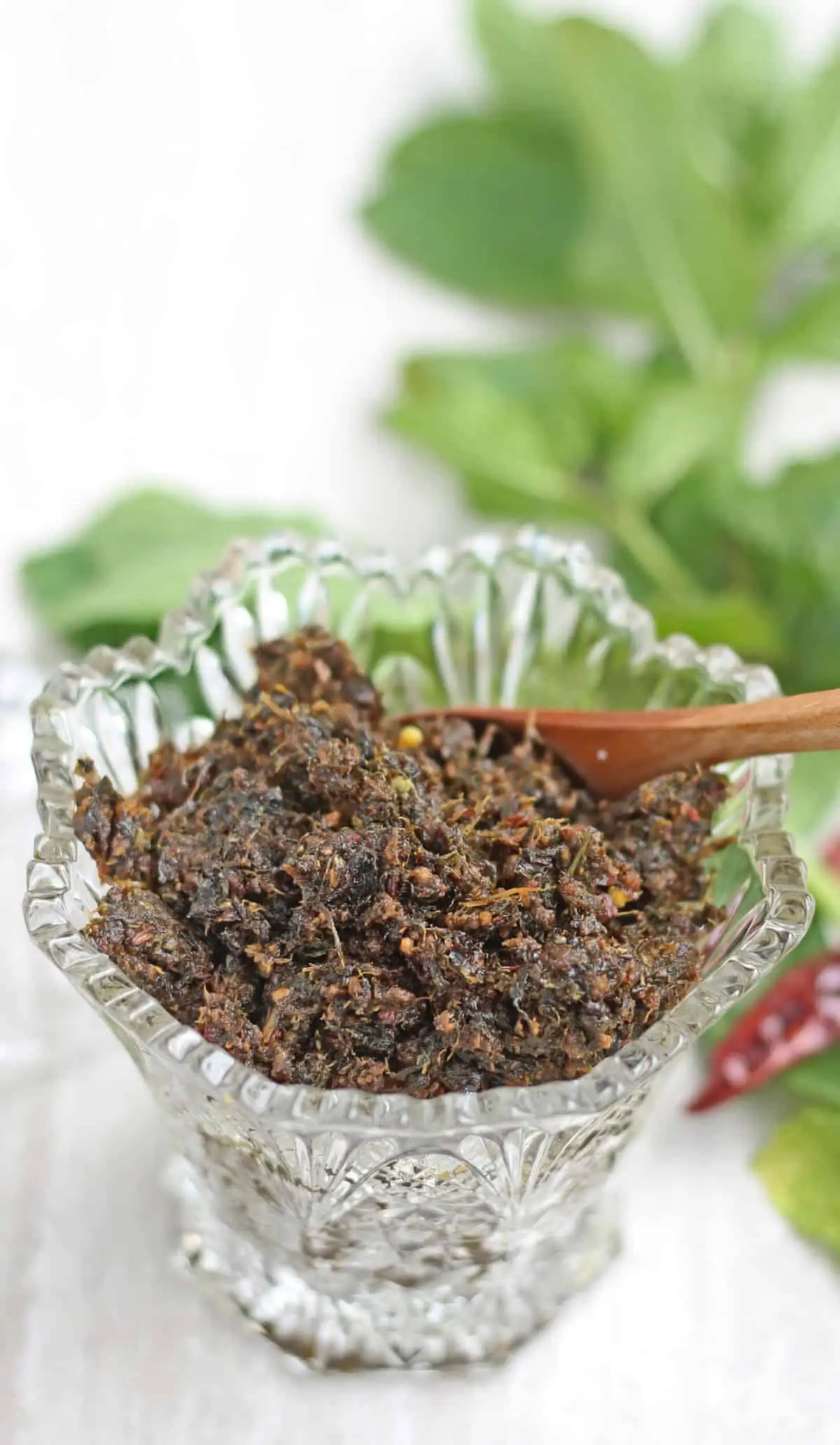
In the meantime, my dear friend Ranganayaki gave me a huge batch of mint from her garden, and it brought back so many memories from our New York days.
- Is it pudina thokku or pudina thogayal?
- Ingredients and Substitutes
- Step-by-step process
- Serving Suggestions
- Expert Tips
- Frequently asked questions
- More recipes to use Mint Leaves
The mint that she got was so fresh and so aromatic that I immediately started making a list of what I was going to cook with it. I thought about making Mint Pulao, but I had plans of making Idlis for dinner.
So I had to change my list and instead thought of making something to go with idlis.
Is it pudina thokku or pudina thogayal?
You could loosely call it pudina thogayal / thuvayal, but I have taken it a bit further and cooked it further for a longer shelf life. Hence, I like to call it pudina thokku or mint pickle as it stores in the refrigerator much longer than the thogayal.
Also, since I had a lot of mint, I decided to make it like a thokku instead of a chutney so I could store it for longer.
If you know us, you will know that we love growing a lot of vegetables. One of my favorite summertime projects is figuring out how to store/preserve the produce to use it for a longer period.
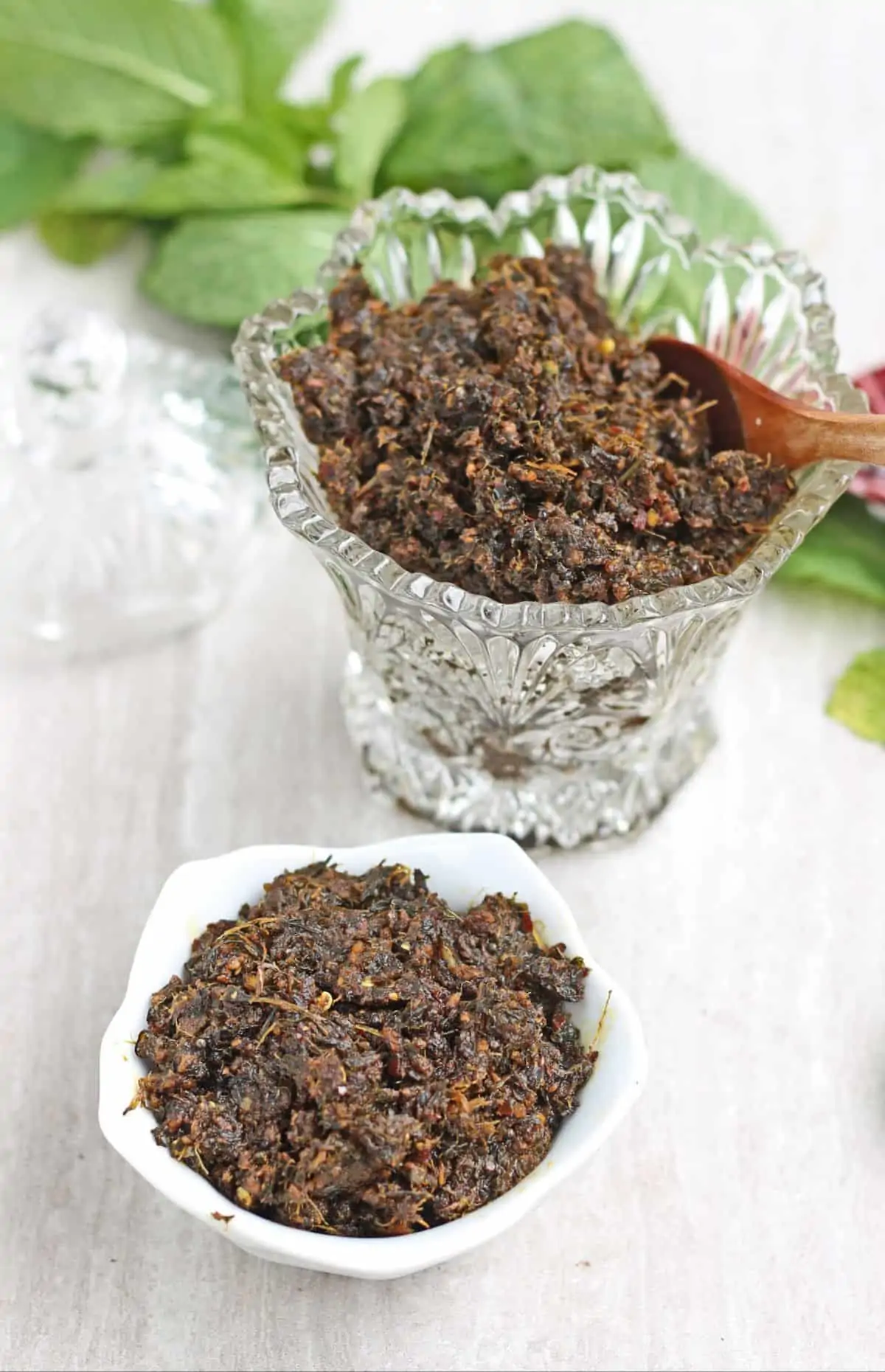
One other way is to make pickles or thokku out of the vegetables. I make tomato thokku , bitter gourd pickle , mango thokku , Apple thokku , tomato pickle with garlic , and so on.
Ingredients and Substitutes
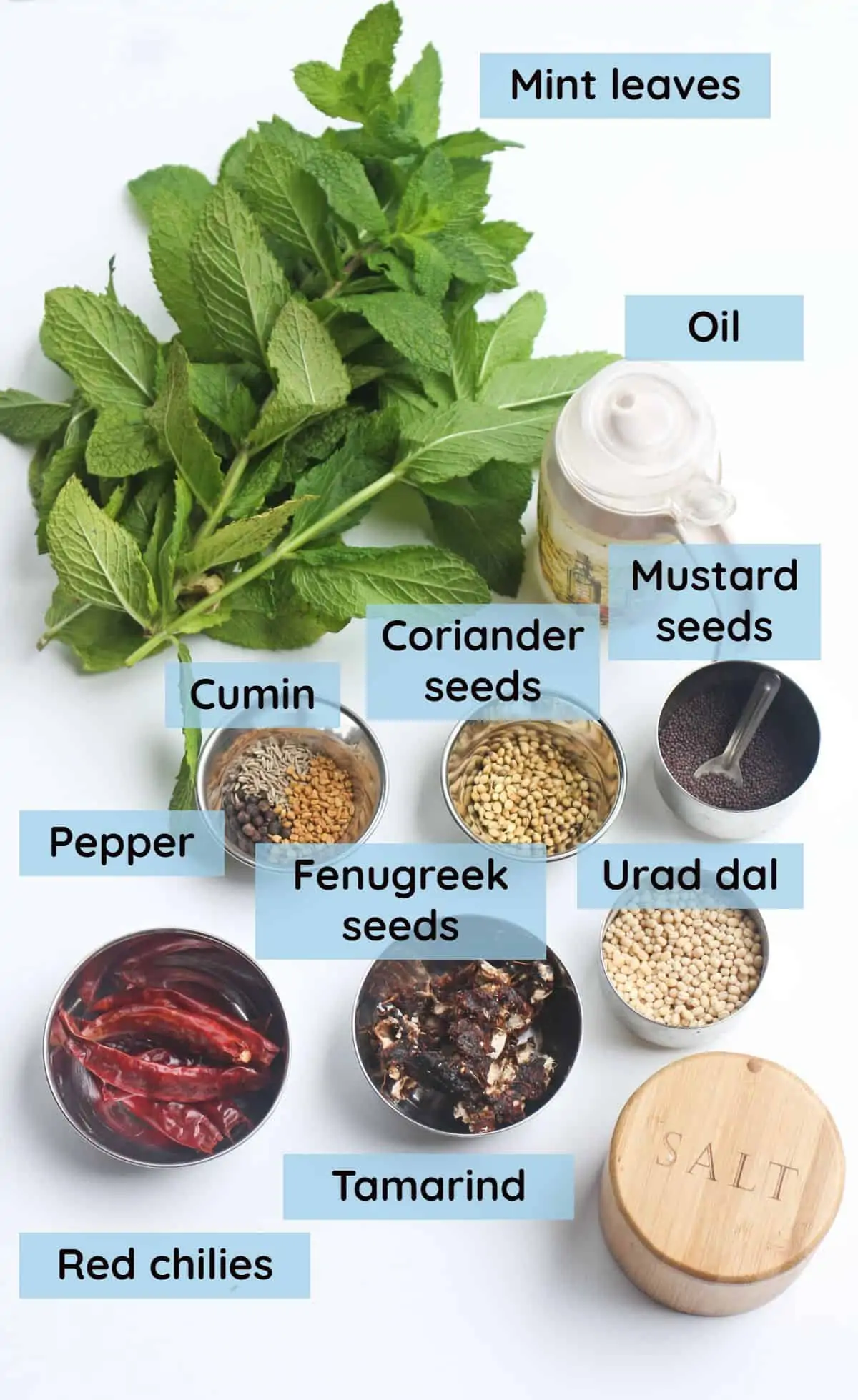
Check the recipe card at the bottom of the page for exact measurements and printable detailed recipes.
Mint leaves - Use fresh mint leaves to make this thokku. I used fresh mint from the garden. Make sure to clean them well to get rid of the dirt before using the pudina leaves in the recipe.
Oil - I like to use Indian sesame oil to make any kind of pickle. It just gives it an authentic flavor. You could use olive oil or vegetable oil instead.
Spices to fry and grind - I used coriander seeds, urad dal (ullutham paruppu), whole dry red chilies, peppercorn, cumin seeds, and fenugreek seeds.
Seasoning - I used mustard seeds and turmeric powder to season the pudina thogayal.
Tamarind - I like to use tamarind for the mint thokku as it gives it the much-needed acidity and enhances the flavor.
Salt and brown sugar (jaggery) - Amma always added vellam (jaggery) in the thokku, and the mild sweetness balanced the heat well. You could skip it if not a fan of sweetness.
Step-by-step process
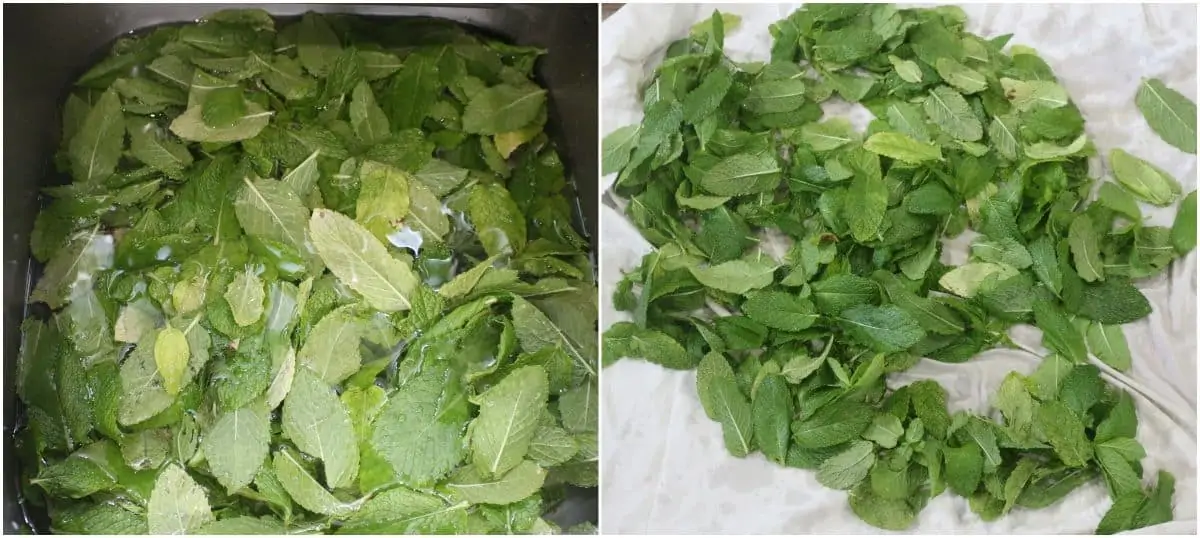
Remove the mint leaves from the stems and keep them aside. Now wash the leaves well to remove any dirt sticking to them. I use my kitchen sink to wash the leaves when I am working with larger quantities. I seal the drain and then fill the sink with water and wash the leaves. Then let the leaves sit in the water to allow the dirt to settle. After a few minutes, carefully remove the leaves without disturbing the dirt.
Now place the washed leaves in a clean kitchen cloth and let them air dry.
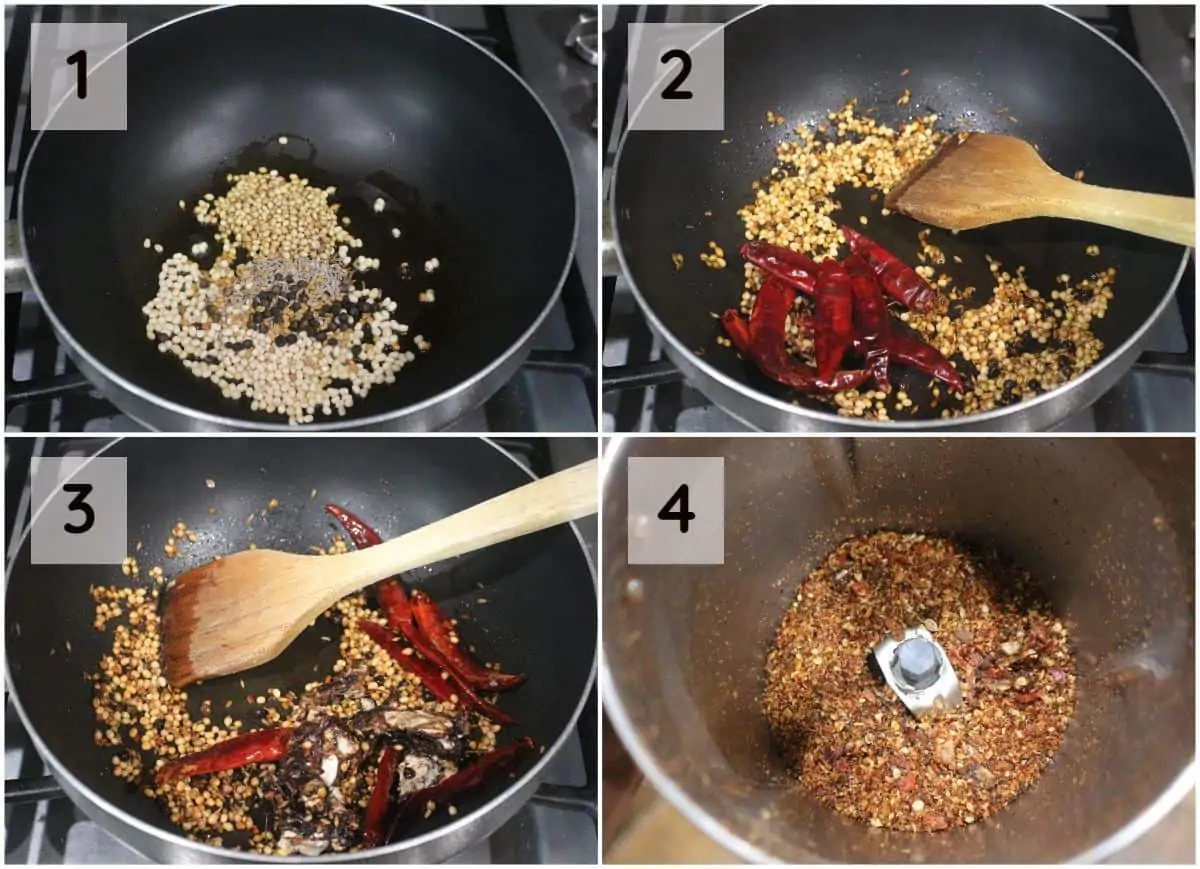
Heat a teaspoon of oil in a pan and add the urad dal, coriander seeds, fenugreek seeds, peppercorns, and cumin. Fry them until they turn aromatic (about 30 seconds) (1) .
Now add the dry red chili and fry for 30 seconds more (2) . Next, add the tamarind, stir once, and turn off the flame. Let the tamarind soften a bit in the heat (3) .
Place the cooled fried ingredients in the blender jar and coarsely grind it (4) .
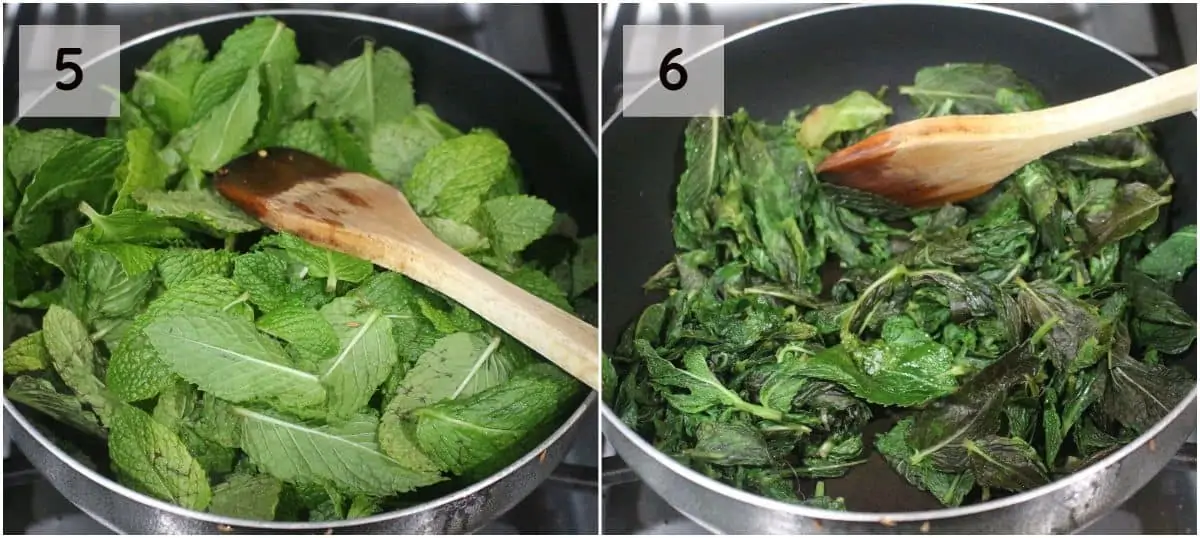
- In the same pan, add ½ teaspoon of oil. Add the washed and dried mint leaves (5) and sauté them on low heat for just about a minute until the leaves start to wilt (6) . Take it off the heat and let it cool down.
Add the mint leaves to the blender with the ground spices and grind it into a paste, adding no water. Add salt when grinding. You can keep the paste slightly coarse like I did, or grind it smoothly.
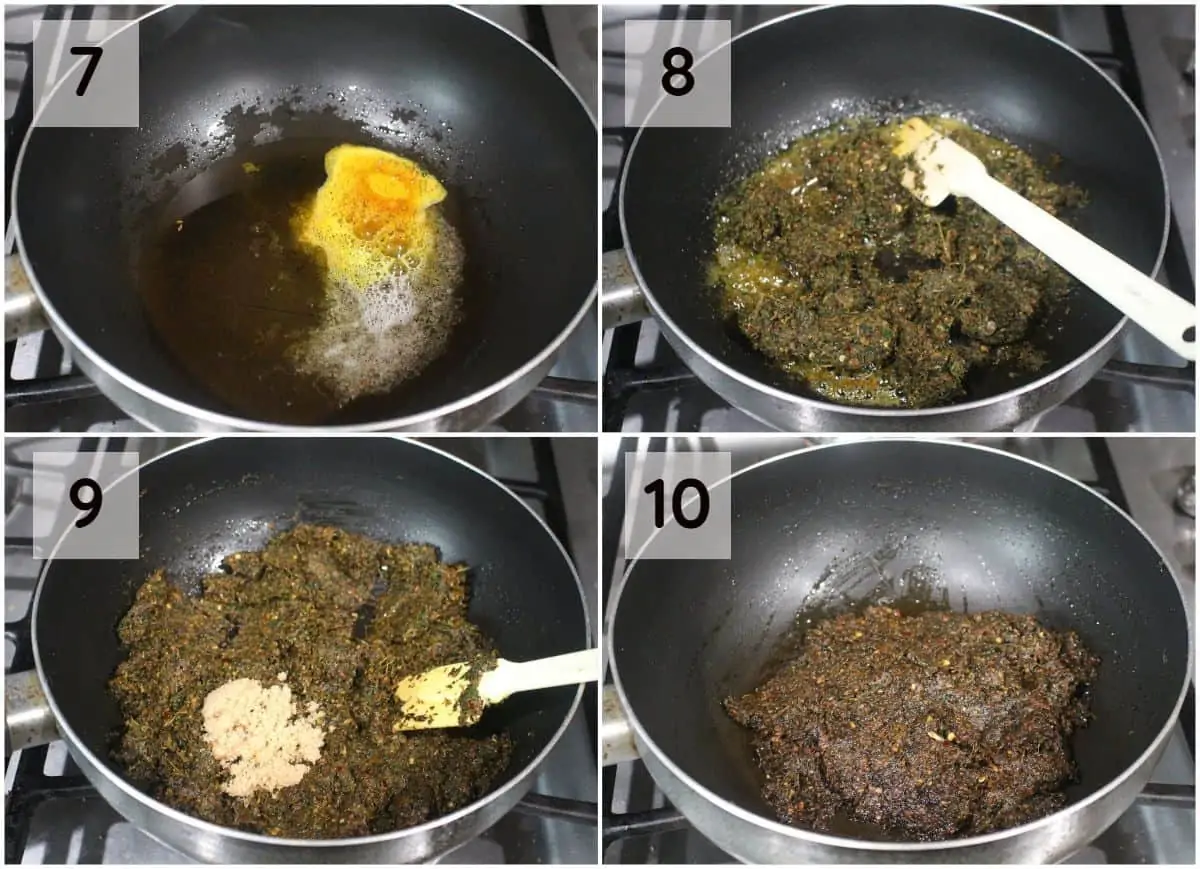
In the same pan, heat about 4 tablespoon of oil and once the oil heats, add the mustard seeds and turmeric powder (7). When the mustard seeds crackle, add the ground paste and mix well (8) .
Cook the mint thokku on low heat. Add the brown sugar/jaggery if using and continue to cook (9). In about 10 minutes or so, the pudina thokku would appear to form a mass and would begin to ooze out the oil (10) . Turn off the heat at this stage.
- Store the cooled mint thokku in a clean glass jar and refrigerate for a longer shelf life.
Serving Suggestions
- Pudina thokku tastes amazing with hot rice and a drizzle of sesame oil or ghee.
- I also love it with idli and dosai . I served it with idlis last night and it was wonderful.
- You could also spread a thin layer of the thokku on the paratha and serve it in a lunchbox.
- I also love using this thokku as pulikaachal and making pudina rice with it.
Expert Tips
- Clean the mint leaves well before using them in the recipe. I usually clean my pudina the night before and let it dry completely before making the pickle.
- This recipe yields medium-hot pickle / thogayal. If you like the pickle to be spicier, increase the red chilies.
- Store the pudina thokku in a clean glass bottle and always use a clean and dry spoon to remove the thokku. This increases the shelf life of the pickle.
- Don’t reduce the amount of oil, as that also helps in increasing the shelf life of the thokku.
Pudina thokku stays well in the refrigerator for 2 to 3 weeks. Make sure that you keep it moisture-free and use a clean spoon every time you use it.
Pudina thokku is cooked a second time in adequate oil to increase the shelf life. They can be used interchangeably.
We can make this pudina thokku along with cilantro/coriander leaves. We can also use part curry leaves along with mint leaves. We can use a mix of mint, cilantro, and curry leaves as well.
More recipes to use Mint Leaves
- Instant Pot Pudina Rice | Mint Pulao
- Mint Juice | Pudina Sherbet Recipe
- Barley Cucumber Salad | Summer Barley Salad
- Quinoa Tabbouleh | Tabouli Salad
Recipe
Equipment
- ▢ Blender
Ingredients
- ▢ 4 cups Mint leaves / pudina tightly packed
- ▢ 5 tablespoon Oil preferably Indian sesame oil
- ▢ 1 ½ teaspoon Coriander seeds
- ▢ 1 ½ teaspoon Urad dal /ullutham parupp
- ▢ 6 Dry red chilies
- ▢ ½ teaspoon Peppercorn
- ▢ ½ teaspoon Cumin seeds
- ▢ ½ teaspoon Fenugreek seeds / vendhayam
- ▢ 3 tablespoon Tamarind lemon sized ball
- ▢ 1 teaspoon Mustard seeds
- ▢ ½ teaspoon Turmeric powder
- ▢ 1 tablespoon Brown sugar / Jaggery (optional)
- ▢ to taste Salt
Instructions
- Remove the mint leaves from the stem and keep them aside. Now wash the leaves well to remove any dirt sticking to them. I use my kitchen sink to wash the leaves when I am working with larger quantities. I seal the drain and then fill the sink with water and wash the leaves. Then let the leaves sit in the water to allow the dirt to settle down. After few minutes, carefully remove the leaves without disturbing the dirt.
- Now place the washed leaves in a clean kitchen cloth and let it air dry.
- Heat a teaspoon of oil in a pan and add the urad dal, coriander seeds, fenugreek seeds, pepper corns and cumin. Fry them until it turns aromatic (about 30 seconds).
- Now add the dry red chili and fry for 30 seconds more. Next add the tamarind and stir once and turn off the flame. Let the tamarind soften a bit in the heat.
- Place the cooled fried ingredients in the blender jar and coarsely grind it.
- In the same pan, add ½ teaspoon of oil. Add the washed and dried mint leaves and saute it in low heat for just about a minute until the leaves starts to wilt. Take it off the heat and let it cool down.
- Add the mint leaves to the blender with the ground spices and grind it into a paste adding no water. Add salt when grinding. You can keep the paste slightly coarse like I did or grind it smoothly.
- In the same pan heat about 4 tablespoon of oil and once the oil heats, add the mustard seeds and turmeric powder. When the mustard seeds crackle add the ground paste and mix well.
- Cook the mint thokku on low heat. Add the brown sugar / jaggery if using and continue to cook. In about 10 minutes or so, the pudina thokku would appear to form a mass and would begin to ooze out oil. Turn off the heat at this stage.
- Store the cooled mint thokku in a clean glass jar and refrigerate for longer shelf life.
Notes
- Clean the mint leaves well before using in the recipe. I usually clean my pudina the night before and let it dry completely before making the pickle.
- This recipe yields medium hot pickle / thogayal. If you like the pickle to be more spicy increase the red chilies.
- Store the pudina thokku in a clean glass bottle and always use clean and dry spoon to remove the thokku. This increases the shelf life of the pickle.
- Don’t reduce the amount of oil as that also helps in increasing the shelf life of the thokku.
Nutrition
More Thogayal
- Peerkangai Thogayal | Ridge Gourd Chutney
- Thengai Thuvayal / Thogayal | Fried Coconut Chutney
- Paruppu Thuvayal | Paruppu Thogayal
- Kothamalli Thuvayal | Cilantro Chutney
Pudina Thokku | Mint Thogayal Recipe
Equipment
- Blender
Ingredients
- 4 cups Mint leaves / pudina tightly packed
- 5 tablespoon Oil preferably Indian sesame oil
- 1 ½ teaspoon Coriander seeds
- 1 ½ teaspoon Urad dal /ullutham parupp
- 6 Dry red chilies
- ½ teaspoon Peppercorn
- ½ teaspoon Cumin seeds
- ½ teaspoon Fenugreek seeds / vendhayam
- 3 tablespoon Tamarind lemon sized ball
- 1 teaspoon Mustard seeds
- ½ teaspoon Turmeric powder
- 1 tablespoon Brown sugar / Jaggery (optional)
- to taste Salt
Instructions
- Remove the mint leaves from the stem and keep them aside. Now wash the leaves well to remove any dirt sticking to them. I use my kitchen sink to wash the leaves when I am working with larger quantities. I seal the drain and then fill the sink with water and wash the leaves. Then let the leaves sit in the water to allow the dirt to settle down. After few minutes, carefully remove the leaves without disturbing the dirt.
- Now place the washed leaves in a clean kitchen cloth and let it air dry.
- Heat a teaspoon of oil in a pan and add the urad dal, coriander seeds, fenugreek seeds, pepper corns and cumin. Fry them until it turns aromatic (about 30 seconds).
- Now add the dry red chili and fry for 30 seconds more. Next add the tamarind and stir once and turn off the flame. Let the tamarind soften a bit in the heat.
- Place the cooled fried ingredients in the blender jar and coarsely grind it.
- In the same pan, add ½ teaspoon of oil. Add the washed and dried mint leaves and saute it in low heat for just about a minute until the leaves starts to wilt. Take it off the heat and let it cool down.
- Add the mint leaves to the blender with the ground spices and grind it into a paste adding no water. Add salt when grinding. You can keep the paste slightly coarse like I did or grind it smoothly.
- In the same pan heat about 4 tablespoon of oil and once the oil heats, add the mustard seeds and turmeric powder. When the mustard seeds crackle add the ground paste and mix well.
- Cook the mint thokku on low heat. Add the brown sugar / jaggery if using and continue to cook. In about 10 minutes or so, the pudina thokku would appear to form a mass and would begin to ooze out oil. Turn off the heat at this stage.
- Store the cooled mint thokku in a clean glass jar and refrigerate for longer shelf life.
Notes
- Clean the mint leaves well before using in the recipe. I usually clean my pudina the night before and let it dry completely before making the pickle.
- This recipe yields medium hot pickle / thogayal. If you like the pickle to be more spicy increase the red chilies.
- Store the pudina thokku in a clean glass bottle and always use clean and dry spoon to remove the thokku. This increases the shelf life of the pickle.
- Don’t reduce the amount of oil as that also helps in increasing the shelf life of the thokku.
